Built on the road, not in a boardroom

Promises don't fix EDI.
Systems do.

Every load tender a shipper sends should land in front of the person who answers it, with its own clock. FlowLine gives every 204 a deadline and answers it with a 990 before the window closes.

35,000+Loads on record since 2015
16,000+Hazmat loads
11 yrsOf our own freight data
23%Hazmat premium since 2023
What FlowLine is

A TMS that answers the tender before the window closes.

FlowLine is a transportation management system built by LIVE Global Logistics. It puts every EDI load tender in front of a real person with a countdown, and sends the accept or decline back to the shipper on time.

It's for carriers, brokers, freight agents and small fleets doing $3M to $8M who are growing past email alerts, spreadsheets and systems they don't control. It works with the EDI connection you already have.

  1. The shipper sends a 204Your EDI connection receives the load tender, same as today.
  2. It lands on a person, with a clockFlowLine puts it in the tender queue with an owner and the shipper's response window counting down.
  3. Accept or decline in one tapFlowLine builds the 990 and sends it. Accepted tenders turn into a load with the stops already filled in.
  4. Nothing is left hangingAnything still open near the deadline is declined automatically, so the shipper always gets an answer.
  5. Then the load runs itselfDriver tracking link, check calls, paperwork match and a rating link after delivery.
Tender risk check

Are you one missed tender away from losing a shipper?

Six things shippers actually judged us on. Check every one that's true for you today.

0 / 6

Check what's true for you to see your risk.

Ian Brown hugging LIVE Global Logistics driver Rick at the cab door of a truck
Me and RickThe drivers are the business
Why I built it

I lost my biggest shipper to a tender I never saw.

I started the hazmat side of the business myself 15 years ago, as an agent under a larger carrier. With a team that started at two people and grew to six, I recruited my own drivers, bought my own trailers when there was no drop-trailer program, did my own pricing and built my own Power BI reports. We grew past 6,000 hazmat loads a year, hauling for chemical distributors, packaging manufacturers and Fortune 500 industrial companies.

In 2025, one of the largest shipper accounts I ran deactivated us. Our tenders passed through three systems before they reached us: an EDI gateway and two different TMS platforms. The only signal was an email alert. In February 2025, those alerts stopped coming.

The customer gave carriers one hour to accept or decline. One load looked like this:

1:14 PMTender sent by the shipper
2:14 PMThe shipper's one-hour window closes
2:33 PMOur 990 accept goes out, 79 minutes after the tender

I put a recovery plan in place, including a 30-minute auto-decline. By late May the customer had moved to other carriers. They told us they had heard "we'll fix EDI" too many times for it to mean anything.

Nobody gave us an answer or a fix, so we built our own. FlowLine exists so no one else has to go through that.
How we did it

Nobody handed us a playbook. This is the one we wrote.

Everything FlowLine checks for you is something we used to check by hand, at 5 a.m. and again at 9 at night. These are the habits, straight from our own emails, that kept shippers with a team that started at two people and grew to six.

The numbers went out every morning

At 8 a.m. the whole team got a screenshot of yesterday's loads, margin and who booked what. Who was first in and last out was in the email. Praise and corrections in the same message, in front of everyone. FlowLine's dashboard is that email, live.

Four rules for every carrier we booked

Written to the brokerage team in June 2022, after a load went sideways on an account we could not afford to lose. Still true. FlowLine's check-call monitor and driver link exist because of rules 3 and 4.

Ian to the team · June 9, 2022
  1. You must get the driver's number and call them.
  2. Get copies of their CDL.
  3. Tracking must be used.
  4. Updates 3 to 5 times a day. ETA, loaded, rolling.
"Remember, people will lie now that freight is hard to get."

Drivers we recruited ourselves

No recruiting department. We found drivers, walked them through the application, the medical card, the drug screen and the Clearinghouse, and sent the welcome email ourselves. Rick is one of them. A driver who feels looked after answers the phone at 3 a.m. That is the whole tracking strategy.

When nobody would give us drop trailers, we bought them

Hazmat shippers load slow and ship often. We asked a customer's distribution center if we could stage trailers there; the answer was no room. So we bought our own 53-footers, placard holders front and back, and kept a weekly sheet of where every one of them was parked and who moved it last. Unit L0001 is in the photo above.

Pricing by hand, then by data

Every rate was mine. I was one of the first users of FreightWaves SONAR and built our own Power BI reports from the load history, so we could see what a lane paid before we quoted it. Eleven years of that is now the rate calculator on this site.

Sales was a cold email and a phone

Carrier setups with Fortune 500 chemical and industrial shippers came from a short email asking to be included in the next bid, then showing up on time until they trusted us. Half the replies went out from a truck cab or a parking lot: "sorry, I'm driving." Fifteen-hour days were the normal day.

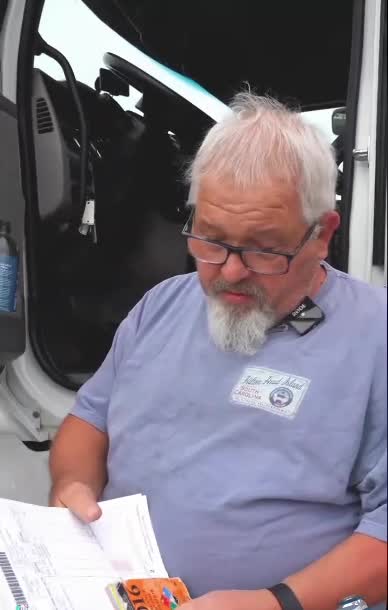
Rick reading the hazmat shipping papers at the cab with the orange Emergency Response Guidebook
On the ground

Rick doesn't roll until the paperwork's right.

Rick hauls hazmat with us. Before the wheels turn, he checks the shipping papers against the load and keeps the orange Emergency Response Guidebook in the cab. FlowLine checks the same kind of things on every load, before billing:

  • 01Rate con, BOL, POD and invoice match each other
  • 02The hazmat details on the papers match the load
  • 03Duplicate BOLs get blocked before they're billed twice
See it working

This is FlowLine. Running.

These are the screens you will run your desk on. Each job has an agent with a rule it follows and a number it reports. Where a person makes the call, the label says so. How each agent works and the time it saves →

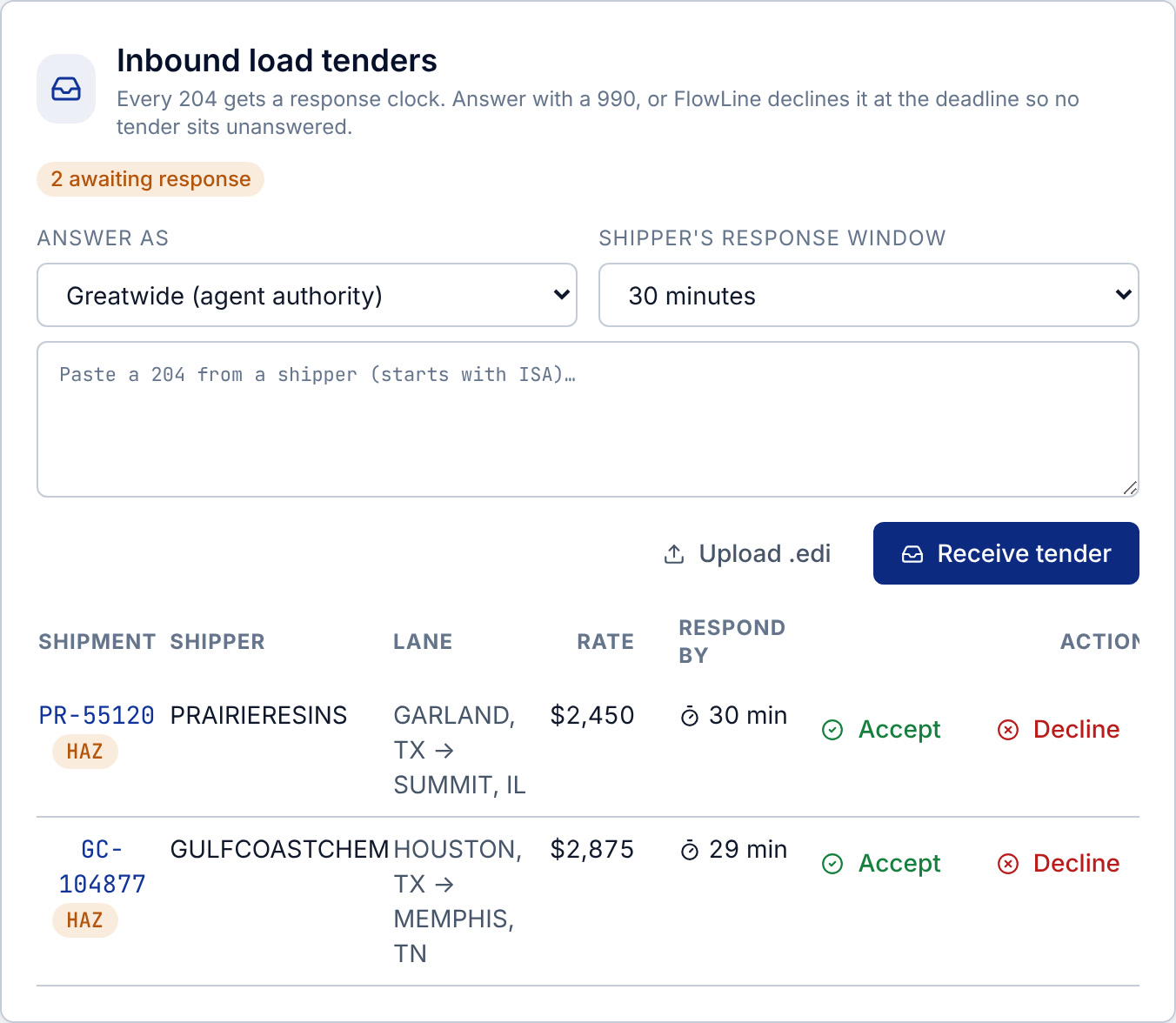
FlowLine tender queue: an inbound EDI 204 from a shipper with a 30-minute response clock and Accept and Decline buttons
01 · Tender Agent · automated

Every 204 lands on a person, with a countdown.

Paste or receive the shipper's tender. FlowLine reads the lane, the rate and the hazmat flag, starts the shipper's window, and builds the 990 the moment you tap Accept or Decline. Anything still open at the deadline is declined automatically, so the shipper always gets an answer.

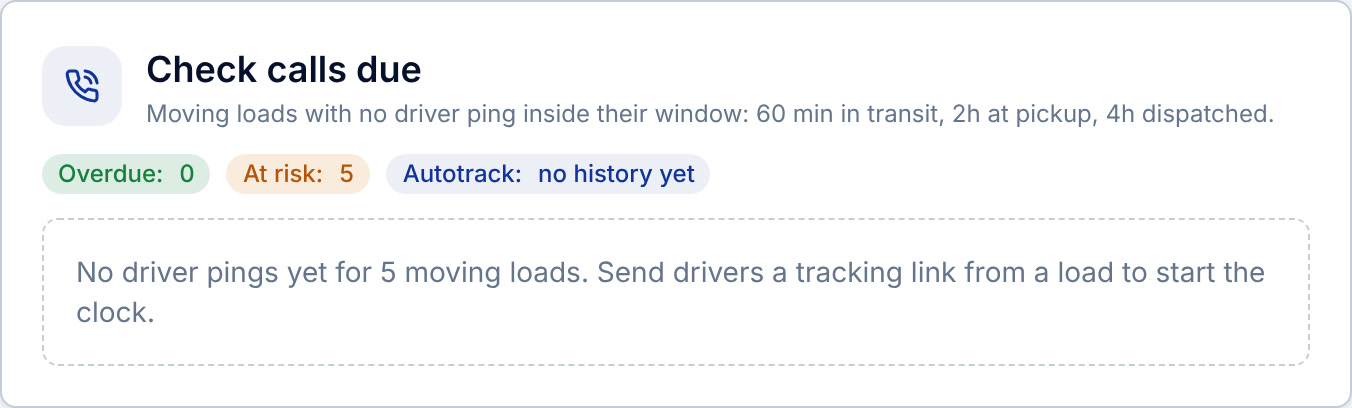
FlowLine GPS tracking screen with check calls due, overdue and at-risk counts and autotrack percentage
02 · Check-Call Agent · automated flags, you make the call

Quiet loads get flagged before they're late.

Drivers share location from a text link, no app. Every moving load has a check-call window: 60 minutes in transit, 2 hours at pickup, 4 hours dispatched. Miss it and the load turns yellow, then red. Autotrack percentage is what brokers put on your scorecard, so we show it to you first.

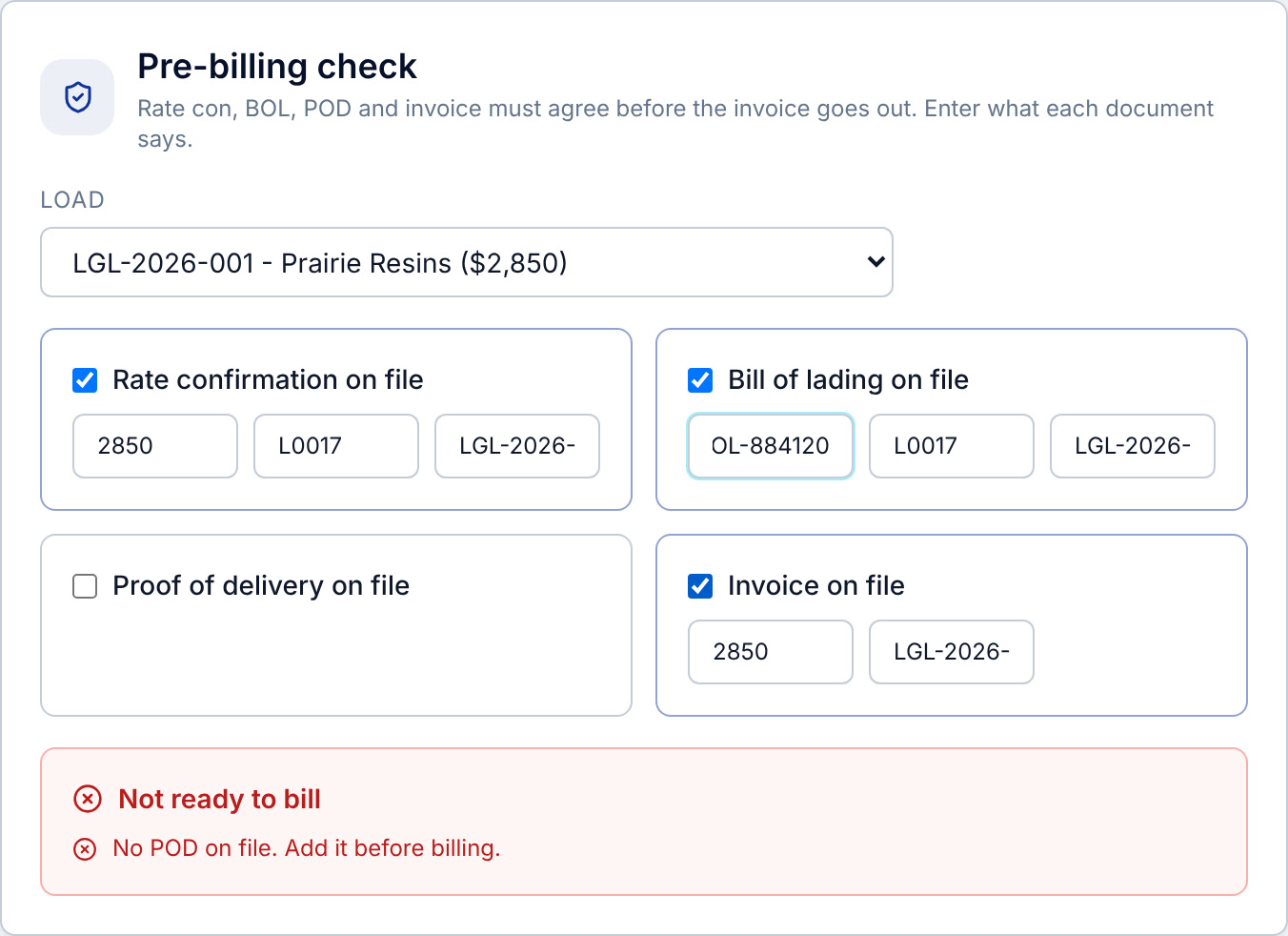
FlowLine pre-billing check showing rate confirmation, bill of lading, proof of delivery and invoice status with a Not ready to bill warning
03 · Paperwork Agent · automated

No invoice goes out until the four documents agree.

Rate con, BOL, POD and invoice are checked against each other before billing. Missing or mismatched paperwork stops the invoice and tells you exactly what's wrong. Duplicate BOLs are blocked, because a double-billed load is how you lose a shipper's trust.

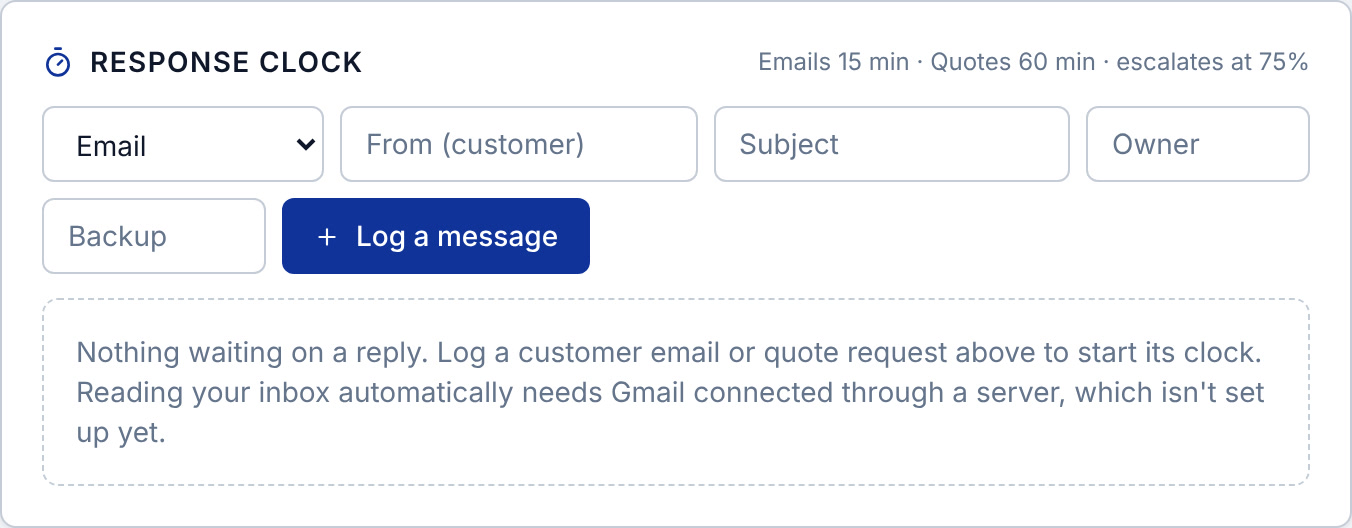
FlowLine response clock on the dashboard: log a customer email or quote request and it gets a reply deadline and an owner
04 · Response Agent · you log it, it keeps time

Customer emails and quotes get the same clock as tenders.

Log the email or spot quote, name an owner and a backup. Emails get 15 minutes, quotes 60. When time runs low it escalates to the backup. Nobody finds out from the customer that a quote sat for a day.

Ian Brown, owner and CEO of LIVE Global Logistics and founder of FlowLine
The owner. The CEO. The solution.

I built this alone. I didn't want anyone else to have to.

I created this so no one would ever have to go through what I did. Having the responsibility of 75 people, drivers included, was an honor. Having to live with no answer to why that deactivation happened, after 15 years, drove me to be proud of the lives I changed and thankful for the opportunity. Now, at 40, I'm blessed it happened, so I could develop new skills to help and adapt to this new age.

I've run hazmat freight as an agent for 15 years. Our load records go back 11 of them, and every number on this site comes from those records; the first four years lived in a different system. We're a tech-driven carrier and brokerage. I did the pricing, the Power BI reports, the EDI, and now the software, with a lot of long days and one good friend who built his own business on search and gave me tips on SEO. Everything else I learned by doing it wrong first.

FlowLine is for smaller companies like ours: carriers, brokers, freight agents and owner-operators who are good at the freight and tired of losing shippers to systems they don't control. It's also for the enterprise shippers on the other end of the EDI, who just want a carrier that answers.

Once I understood why it happened, I decided to build something that would live on after that one loss and help the people who run freight the way we do. I'm ready to help other people succeed in their business with what it taught me.

Owner and CEO, LIVE Global Logistics · Founder, FlowLine · Dallas, TexasIan Brown
LIVE Global LogisticsBuilds and runs FlowLine. Hazmat carrier and brokerage in Dallas: our own trucks and trailers on the carrier side, brokered freight on the other, as an agent under a larger carrier's authority for 15 years. Three to six people in the office; up to 75 people, drivers included, who depended on it.
1,000+shippers and brokers we've hauled for, from Fortune 500 chemical makers to the big 3PLs
5,800+carriers we've booked and paid. We know both sides of the rate con.
Brokers we have hauled for with our own trucks and trailers
  • Landstar
  • J.B. Hunt
  • Total Quality Logistics
  • RXO
  • Echo Global Logistics
  • Arrive Logistics
  • Mode Transportation
  • Ryan Transportation
  • Recon Logistics
  • Nolan Transportation Group
  • XPO
  • Schneider
  • Dupre Logistics
  • Dynamic Logistix
  • BNSF Logistics
  • GlobalTranz
  • Sunteck
  • Watco
  • Transplace
  • Axle Logistics
  • C.H. Robinson
  • Coyote
  • Uber Freight
  • Hub Group
  • Werner Logistics

From our load records, 2015 to 2026. Names are listed as a matter of fact, not endorsement. Shipper names are kept private.


From the people who hauled it

“It's the best job I ever had. And you're the reason for that. Still feel free to give my number to new prospects, I will tell them the truth.”

Calvin, LIVE Global Logistics Driver of the Year · text message, September 2018
★★★★★

Great team works hard and does a good job keeping you moving on good haz-mat loads and communicates well with drivers.

Luke · Google review · Dec 2018
★★★★★

Professional Hazardous Materials Transport. Experienced Logistics professionals.

Rochell D · Google review · Jan 2018
★★★★★

Absolutely good service. Great company I have worked with them a lot and always a pleasure.

Adam Stafford, carrier · Google review · Jun 2025
The Hazmat Freight Report
23%

The year the hazmat premium doubled.

Eleven years and 35,000+ loads from one agent's book: rates by class, distance and 326 real lanes, how shippers grade carriers, what COVID broke, and the mistakes that cost us. Real numbers, written for shippers, owner-operators and agents.

Open the rate calculator Read the report
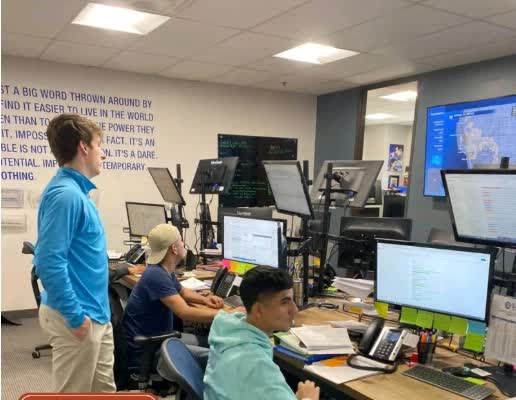
The LIVE Global Logistics dispatch floor in Dallas, with brokers working the phones and load boards
A lean team

Three to six people. 6,000 hazmat loads a year.

That's what the right system lets a small team do. Our Dallas floor runs both sides, carrier and brokerage, and trained young brokers who ran real freight from day one. FlowLine is the system we wish we'd had the whole time, built for carriers, brokers and agents who are ready to grow without losing the shippers who got them there.

For your trading partners and your developer

EDI in. API in. Same clock.

Not every partner runs EDI. Brokers, 3PLs and shipper TMS platforms can send FlowLine a tender over a plain JSON API with a partner key. It lands in the same queue, with the same response window and the same automatic decline, and the 990 goes back the same way.

  • Tender API. POST a load with stops, dates, equipment and rate. Get back the tender ID and the deadline. Poll or receive the accept or decline.
  • Driver link. One-time tracking links per load. Location pings every five minutes feed ETAs and check calls. Drivers never see the rate.
  • Verified ratings. A one-tap rating link after every delivered load, tied to that load, published good or bad, with a public summary feed for your website.
  • Your EDI stays yours. FlowLine reads the 204s your VAN or gateway receives and produces the 990s. It doesn't replace your connection.
POST /api/tenders
Authorization: Bearer fl_partner_…

{
  "shipmentId": "SW-778812",
  "windowMinutes": 60,
  "stops": [
    { "type": "pickup",   "city": "Garland", "state": "TX", "date": "2026-04-22" },
    { "type": "delivery", "city": "Summit",  "state": "IL", "date": "2026-04-23" }
  ],
  "equipment": "Van 53",
  "hazmat": { "class": "3", "un": "UN1263" },
  "rate": 2450
}

201 { "tenderId": "…", "respondBy": "2026-04-21T15:15:00Z" }
Plain words

The terms, in one minute.

EDI 204
The load tender. The shipper's electronic offer of a load: stops, dates, equipment, usually the rate.
EDI 990
Your accept or decline for a 204. It has to go back inside the shipper's window or the load moves on.
EDI 214
The status message: picked up, in transit, delivered. Many shippers require them at set points.
EDI 210
The freight invoice, sent electronically. Has to match the rate con and the BOL or it bounces.
Tender window
How long the shipper gives you to answer a 204. Often 60 minutes, sometimes 30. Missing it is how you get deactivated.
Rate con
Rate confirmation. The agreed price and terms for one load, signed by both sides before it moves.
BOL
Bill of lading. The shipping contract and receipt. For hazmat it carries the UN number, class and packing group.
POD
Proof of delivery. The signed BOL at the receiver. No POD, no invoice.
Check call
A scheduled location update on a moving load. Shippers and brokers score you on how many you miss.
Autotrack
The share of a load's expected location pings that actually arrived. Below 95% shows up on broker scorecards.
SCAC
The four-letter carrier code on EDI messages. An agent answers under the authority holder's SCAC.
VAN
Value-added network. The mailbox service that carries EDI files between you and the shipper. FlowLine reads from it; it doesn't replace it.
Freight agent
An independent operator who books and runs freight under a larger carrier's authority and insurance, for a split of the revenue.
UN number
The four-digit code for a hazardous material, like UN1263 for paint. It is the one identifier every country, carrier, shipper and emergency responder agrees on. Get it right on the papers and the placard and everything else follows.
Hazmat premium
How much more a hazmat load pays per mile than the same dry-van lane. In our book: 5 to 11% through 2022, 20 to 23% since 2023.
Straight answers

EDI tenders, plainly.

What is FlowLine?

FlowLine is a transportation management system (TMS) built by LIVE Global Logistics. It puts every EDI 204 load tender in front of the person who answers it, with a response clock, and sends the 990 accept or decline before the shipper's window closes. It also tracks drivers through a text link, checks paperwork before billing, watches trading partner connections, and puts a clock on customer emails and quotes.

What is an EDI 204 load tender?

A 204 is the electronic message a shipper sends to offer a load to a carrier. It carries the shipment ID, pickup and delivery stops, dates, equipment and often the rate. The carrier is expected to answer it with a 990.

What is an EDI 990, and why does response time matter?

A 990 is the carrier's accept or decline for a 204. Shippers give carriers a fixed window to respond, often an hour, and then move the load to the next carrier. Late or missing 990s are one of the most common reasons shippers deactivate carriers.

Why do carriers miss EDI tenders?

Usually because the tender passes through several systems, such as an EDI gateway and one or more TMS platforms, before a person sees it, and the only signal is an email alert. When an alert fails or lands in a busy inbox, the window closes before anyone answers.

Who is FlowLine for?

Carriers, brokers, shippers, small trucking fleets and freight agents running under a larger carrier's authority, roughly $3M to $8M in revenue, that are growing past what email, spreadsheets and systems they don't control can handle.

Does FlowLine replace my EDI provider or VAN?

No. FlowLine reads the 204s your EDI connection receives and produces the 990 responses. Your trading partner connection still carries the files.

Do drivers need to install an app?

No. The driver gets a link by text, taps Start sharing and allows location. The link works only for that load and only until it expires, and the driver never sees the rate.

Who built FlowLine?

Ian Brown, a hazmat freight agent for 15 years and founder of LIVE Global Logistics in Dallas, Texas. His team, two people at the start and six at its peak, moved more than 35,000 loads, over 16,000 of them hazmat. He built FlowLine after losing a major shipper account to EDI tenders that reached his team too late.

Your turn

Never miss another tender.

Walk me through your last missed tender. Twenty minutes. We'll trace where it got stuck and what would have caught it. No pitch deck.

Prefer email? hello@shipwithlive.com. Ian reads every request himself.